- Sector 13, Kharghar, Navi Mumbai.
- Call Us: +91-9930067451
- dr.amarkulkarni@gmail.com

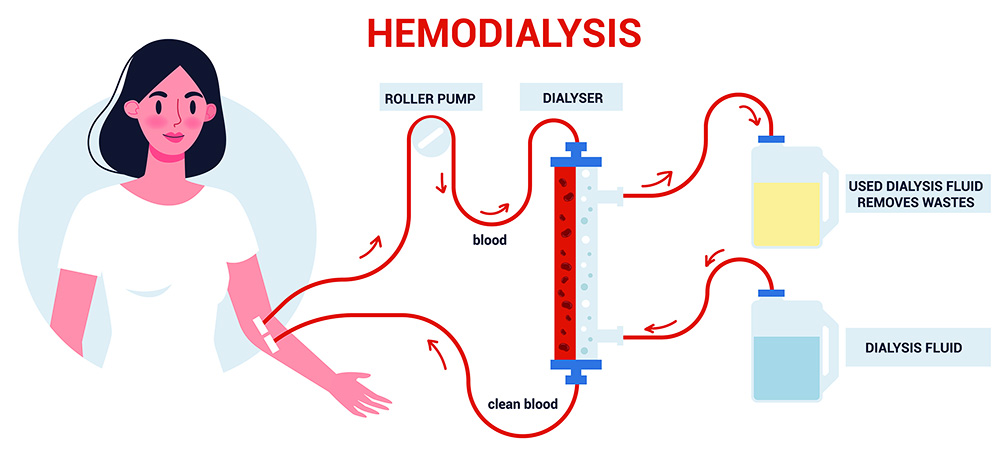
Hemodialysis is a medical treatment for individuals with kidney failure or end-stage renal disease (ESRD) in which waste products and excess fluids are removed from the blood through a machine called a hemodialyzer. This is necessary because when the kidneys are unable to function properly, waste products and excess fluids can accumulate in the body, which can lead to serious health problems.
During hemodialysis, the patient's blood is drawn from their body through a surgically created access point (such as a fistula, graft, or catheter) and then passed through the hemodialyzer. The hemodialyzer contains a semipermeable membrane that allows waste products and excess fluids to be removed from the blood. At the same time, a special solution called dialysate is circulated on the other side of the membrane, which helps to remove the waste products.
The filtered blood is then returned to the patient's body through a separate tube. This process typically takes several hours and is usually performed three times per week in a hospital or dialysis center.
Before the hemodialysis procedure, the patient's vital signs are checked, and their weight and blood pressure are measured. The patient's blood is also tested to determine the appropriate dialysis prescription. During the procedure, the patient may experience some discomfort, such as cramping or a drop in blood pressure, but these side effects can usually be managed with medications or adjustments to the treatment.
Hemodialysis is a life-saving treatment for individuals with kidney failure, but it requires ongoing management and monitoring to ensure its effectiveness and safety. The patient will need to follow a strict diet and fluid intake regimen, take medications as prescribed, and attend regular medical appointments to manage their condition effectively.

Dr. Amar Vilas Kulkarni is a Internal Medicine and Nephrologist/Renal Specialist in Navi Mumbai and has an experience of 20 years in these fields.
Copyright By Dr Amar Kulkarni.