- Sector 13, Kharghar, Navi Mumbai.
- Call Us: +91-9930067451
- dr.amarkulkarni@gmail.com

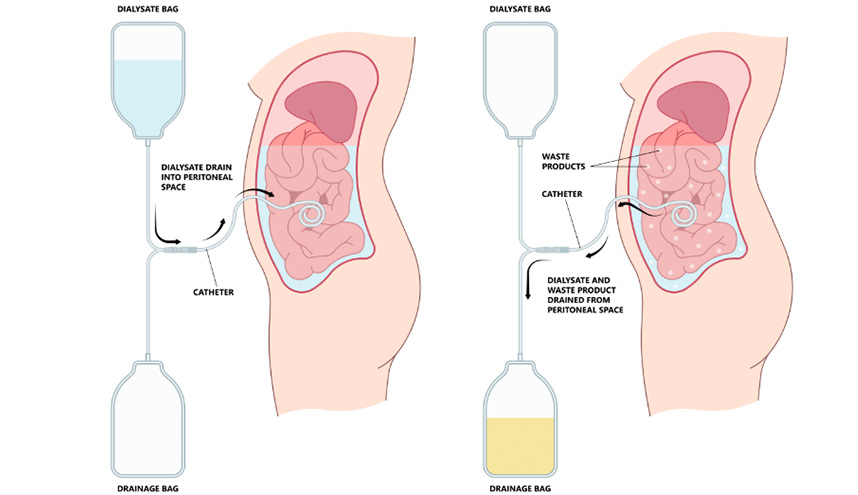
Peritoneal dialysis is a type of dialysis used to treat patients with kidney failure. It involves using the lining of the patient's abdominal cavity, called the peritoneum, as a natural filter to remove waste products and excess fluids from the body.
During peritoneal dialysis, a catheter is surgically inserted into the patient's abdomen. A special dialysis solution is then introduced into the abdominal cavity through the catheter. The solution is left in the cavity for a set period of time, allowing it to absorb waste products and excess fluids from the bloodstream. The solution is then drained out of the abdomen and discarded.
Peritoneal dialysis can be done at home or in a dialysis center, and it can be done manually or with the use of a machine called a cycler. There are two main types of peritoneal dialysis: continuous ambulatory peritoneal dialysis (CAPD), which is done manually several times a day, and automated peritoneal dialysis (APD), which is done using a cycler at night while the patient sleeps.
Peritoneal dialysis can offer several benefits over other types of dialysis, such as hemodialysis. It can be done at home, allowing for more flexibility and independence, and it can provide more continuous and gentle removal of waste products and excess fluids. However, peritoneal dialysis may not be suitable for all patients and may require a significant amount of training and lifestyle adjustments.

Dr. Amar Vilas Kulkarni is a Internal Medicine and Nephrologist/Renal Specialist in Navi Mumbai and has an experience of 20 years in these fields.
Copyright By Dr Amar Kulkarni.